Gardeners Favor Japanese Anemones for Late-Summer Color
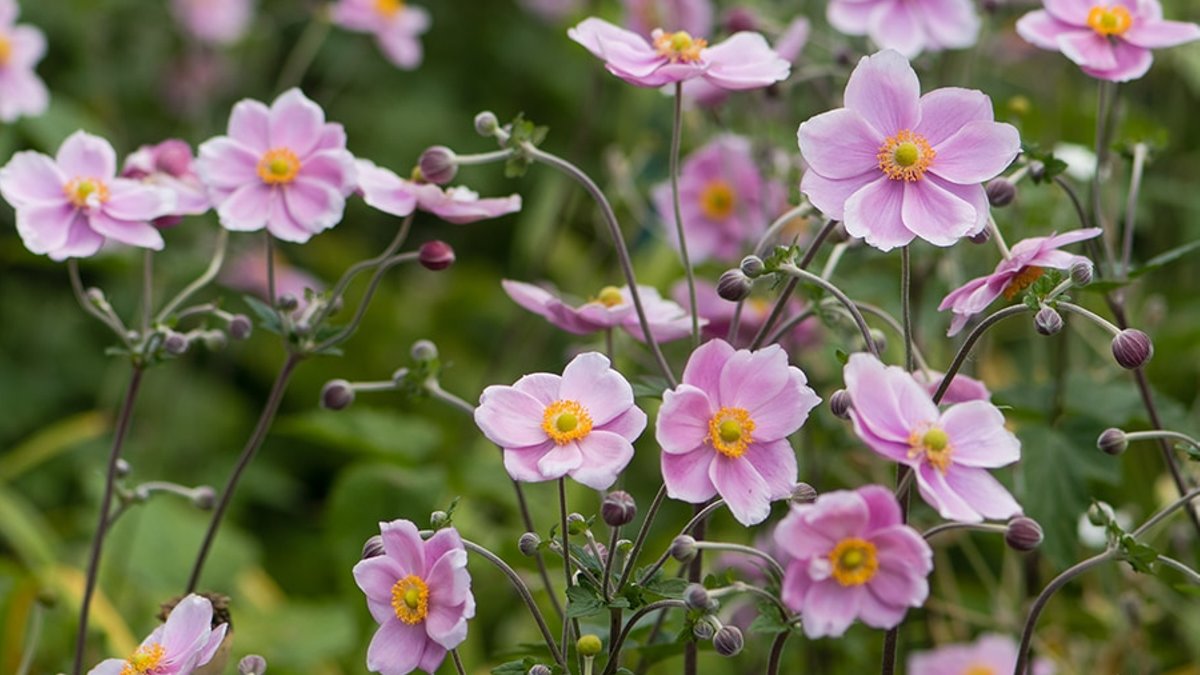
Japanese anemones are a dazzling addition to late-summer gardens, with their varied forms and colors. They are relatively pest- and disease-free, and their delicate, fresh blooms bring color to borders from August into the autumn months. These flowers are a traditional choice for cottage gardens, where they are often used in large planting schemes because of their reliability and range of forms and colors.
Japanese anemones are tough once established and can tolerate partial shade and a range of soils, flowering generously year after year. Rosy Hardy of Hardy’s Cottage Garden Plants notes that they thrive best in partial shade, although they can grow in full sun if the soil doesn’t become excessively dry.
Planting and Growing Conditions
A position with morning sun and afternoon shade is ideal for Japanese anemones in warmer gardens. It’s essential to avoid planting them in a location that is completely dry beneath thirsty trees, unless additional moisture can be provided. They prefer fertile, moisture-retentive but well-drained soil, and poor ground should be improved with plenty of garden compost or well-rotted organic matter before planting.
Container-grown Japanese anemones can be planted at any time when the soil isn’t frozen or waterlogged, but spring is a good time to do so, as it gives the plant a full growing season to establish its roots before the first winter. New plants should be watered thoroughly after planting and kept watered during dry spells while they establish.
They can spread through underground runners and may gradually occupy more space than expected, so it is important to allow them room to grow. They are excellent for filling a large border but may need containing in a small garden. Established plants are fairly strong, but they dislike prolonged drought, and their tall stems can wilt dramatically if the soil becomes very dry.
Varieties of Japanese Anemones
One of the most common forms of Japanese anemones is Anemone × hybrida, which is autumn-flowering. The ‘Whirlwind’ variety is an older form of this type, with tall, double white flowers that are striking in the back-middle of a border. Its leaves are complete, rather than being completely dissected, and it can form very large clumps with a tendency to spread outwards.
Anemone hupehensis varieties are also autumn-flowering and can be used as ground cover. Unlike ‘Whirlwind’, this variety does not come from a clump, and its leaf is dissected into three pieces. Anemone hupehensis var. japonica ‘Pamina’ likes semi-shade and will flower in late summer, either August or September.
Another notable variety is Anemone barbulata, which has small white flowers with a beautiful blue tint on the reverse. This plant is different from the others in that it comes from just one basal clump and is a clump former, making it a nice and contained choice. The foliage is divided into three separate pieces and grows larger than a hand, forming a great mound of frilly leaves.
Removing faded flowers can keep plants looking tidy and may encourage further flowering. Alternatively, the seedheads can be left standing, providing a naturalistic appearance and attracting pollinators to the garden. Once flowering finishes, the foliage should be allowed to remain until it has naturally started to die back, at which point the stems can be cut down in late autumn or early spring.


