Child Studio launches Union Square hotel and club
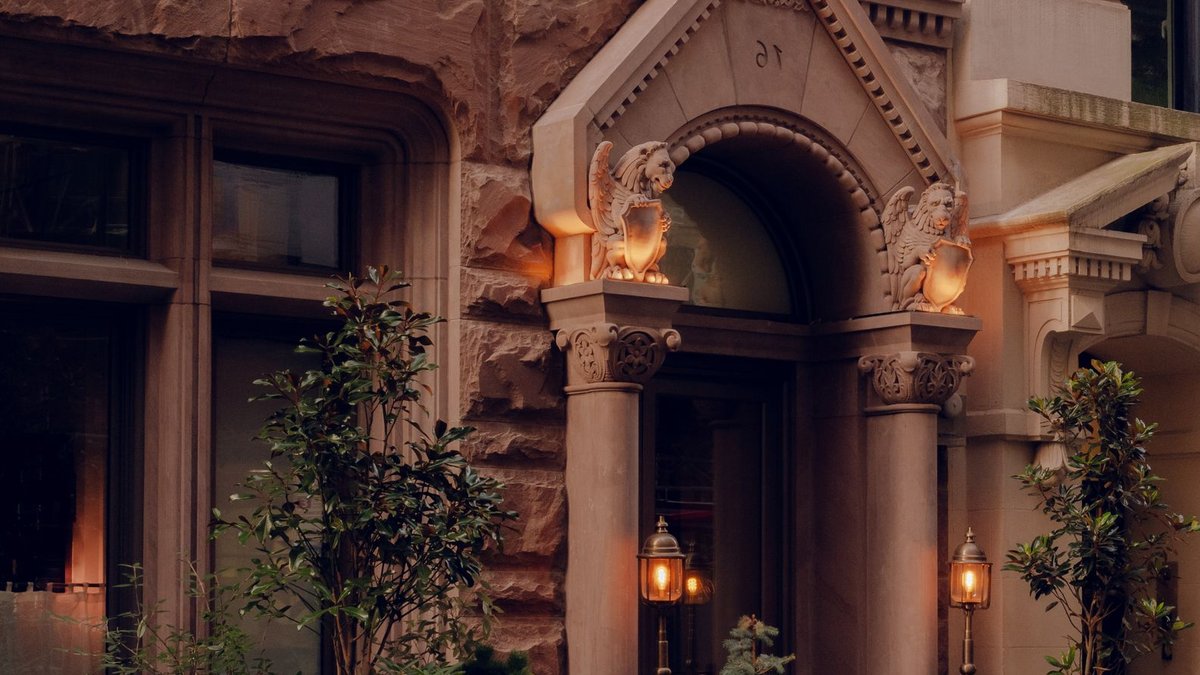
London-based Child Studio has opened its first U.S. hotel and private members’ club, The Twenty Two, inside a nine-storey Romanesque Revival building on Union Square.
Historic backdrop
The venue occupies the former Margaret Louisa Home, completed in 1891 and founded by socialite Margaret Louisa Vanderbilt Shepard as a residence for independent single women arriving in New York.
Archival photos from the Museum of the City of New York show the original structure with Shaker-inspired furniture, modest bedrooms and warm, painted wood-panelled parlors. Those images reveal how the building’s simple elegance has long been a backdrop for personal stories of ambition and resilience.
Design influences
Designers Alexy Kos and Che Huang began the project by studying Madeleine Castaing’s midnight-blue and leopard-print palettes and Renzo Mongiardino’s tented 1960s salons. Their research aimed to translate historic colour stories into a contemporary guest experience.
“We were drawn to Castaing’s playful yet romantic sensibility,” say Kos and Huang. “Her ability to create interiors that feel at once cultivated and unexpected was the perfect reference point for shaping this room as a deeply comfortable and intimate members’ retreat.”
For the rooftop club, they turned to Mongiardino’s historic tented rooms, noting that “Fabric becomes a defining architectural element,” the designers note, “softening the space and filtering the changing light above the city.”
The lobby is deliberately townhouse-scaled, featuring velvet drapery, dark mahogany, a Jacobean-era carved desk paired with a Tiffany lamp for check-in. This modest scale invites guests to feel at home rather than overwhelmed by the building’s height.
Across the building, 78 rooms and 19 suites repeat arched doorways, hand-painted lacquer doors and herringbone parquet, each suite finished in a distinct hue such as burgundy, ink black, caramel or ivory.
“Conversations at The Twenty Two’s Mayfair outpost helped set the tone, site visits in New York allowed the design to evolve with the building, and in Venice, we worked closely with artisans who brought our furniture and lighting to life,” say Kos and Huang.
Impact on the neighborhood
By reinterpreting the building’s original character rather than preserving it as a museum piece, the project offers Union Square a new cultural hub that invites both travelers and local members to experience a refined yet approachable atmosphere.


