Es Devlin on the influences behind her art and life
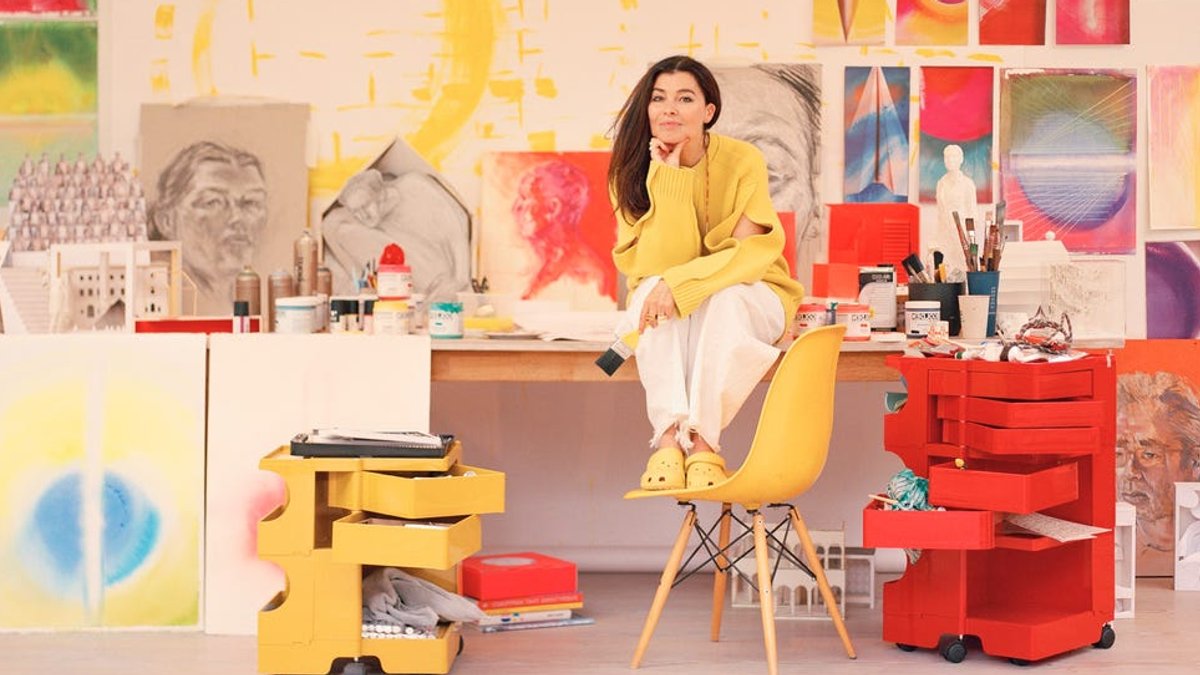
Es Devlin, the artist known for large-scale installations and stage designs at venues including the Tate Modern, Lincoln Center, and past Olympic ceremonies, merges technical skill with cultural relevance. Her projects—ranging from opera sets to public art—frequently explore the intersection of human experience and the natural world. This September, she assumes a new role as artistic director of Homo Faber 2026: An Island of Light, a Venice Biennale exhibition featuring 15 installations by global craft artists on San Giorgio Maggiore. Scheduled for September 2026, the event represents her first major curatorial effort, broadening her impact beyond her own artistic output.
Her latest stage work returns to the Royal Opera House this autumn for a production of Mozart’s Don Giovanni, running on the Main Stage from September 10 to October 15, 2026. The design, characterized as atmospheric and immersive, aligns with her established method of blending light, architecture, and movement to deepen narrative impact. Tickets begin at £12, ensuring accessibility despite the production’s prestige. The selection of Don Giovanni, a story of reckoning and moral complexity, fits an artist whose work often examines human relationships and ecological concerns.
Music plays a key role in Devlin’s creative approach. Her first record was The Head on the Door by The Cure, a band whose moody intensity parallels the emotional weight of her own projects. The Bulgarian choir Le Mystère des Voix Bulgares remains her favorite for its haunting vocal textures, while she currently listens to U2’s Days of Ash EP. The EP’s raw honesty and resilience reflect her response to contemporary challenges, “Very few artists have the courage to respond to today’s polycrises with such a combination of honesty, clarity and joy,” she observes.
Read Also: Studio Braw shares tips for personalizing home interiors
How Books and Art Redefine Human-Nature Bonds
Literature also shapes her perspective. Becoming Animal: An Earthly Cosmology by David Abram stands as the most influential book of her life, arguing that humans are not isolated from nature but deeply entwined with it. Currently, she reads Semiha Berksoy’s Aria of All Colors, the catalogue for the Turkish artist’s Istanbul Modern show, which treats color as both physical material and symbolic language. The contrast between Abram’s philosophical framework and Berksoy’s visual experimentation mirrors her own diverse influences.
Devlin’s film preferences reveal a similar breadth. The Truman Show, released in 1999, was profoundly prescient in anticipating debates about reality and surveillance. She is currently watching Bad Sisters, a darkly comedic series consumed in marathon sessions. The show’s mix of humor and sharp critique aligns with her ability to merge aesthetic beauty with unsettling themes.
Architecture, Nature, and Childhood Roots
Her tastes extend to architecture and natural environments. The Louisiana Museum of Modern Art in Denmark, with its gardens and coastal setting, is her preferred gallery space, where art and environment merge. The Borobudur temple in Indonesia ranks as her favorite structure, its layered carvings serving as a meditation on time and spirituality. Even her earliest memory, drawing on walls as a child, hints at a lifelong rejection of fixed boundaries in design.
Read Also: Best Dividers for Space Definition
Her personal experiences reflect global mobility. The most memorable hotel stay occurred aboard the Oracle, a wooden Indonesian Phinisi boat handling Raja Ampat. The most compelling exhibition she’s attended was Psycho Buildings at London’s Hayward Gallery, which merged architecture and art into a disorienting, immersive experience. Her favorite painting, Evening Environment North Frisia (Abendlandschaft, Nordfriesland) by Emil Nolde, captures nature’s unfiltered emotional power, a quality she channels into her own work.
Craft as a Living Dialogue
Devlin’s artistic philosophy centers on adopting multiple possibilities rather than fixed outcomes. In her piece Forest of Us, she writes: “Every time I reach a fork in the road I take both paths, and then take both again at the next division. The more my paths divide and multiply, the more I offer myself to the air.” This mindset, rejecting singular solutions, defines her approach to both creation and curation. For Homo Faber 2026, craft becomes a living conversation between humans and their surroundings, not just a technical skill.
The clifftop path at Fairlight Glen in East Sussex remains her favorite place. There, the interplay of land, sea, and sky mirrors the relationships she explores in art: dynamic, interconnected, and ever-shifting. It serves as a reminder that her most lasting works, whether stage sets, sculptures, or curatorial projects, do not merely respond to their surroundings. They become part of them.


